About Jacob Molyneux, senior editor/blog editor

Senior editor, American Journal of Nursing; editor of AJN Off the Charts.

“They Call Us Doctor, and We Call Them By Their Names”

Just stumbled on a blog post written by a first-year resident who calls himself “Anonymous Doc.” He raises a good question about why nurses and doctors are referred to in such different ways:

I don’t think I’ve talked about this before, but the doctor/nurse divide is weird. One of my intern friends called me the other night and said there’s a nurse he likes, and in theory wants to ask her out, but doesn’t think he should. It would be awkward, he’s like her superior… he doesn’t feel comfortable doing anything. And maybe he’s right. But the whole dynamic is weird. They call us doctor, and we call them by their names– and sometimes not even. At one of the hospitals, there’s this strange custom where the nurses all go by Miss or Mister and their first names. So I’m Dr. Lastname and they’re Miss Jenny or Mister Steve. It’s bizarre. Miss Jenny sounds like a kindergarten teacher. Maybe. And some of the residents use these names when they talk about the nurses to each other, like– “did you give the order to Miss Amber?” “did you tell Miss Jeanette?” Are we children? I feel like we’re colleagues, and we should all just call each other by our first names. Like colleagues do. Patients can call us Dr. Whatever, but I don’t feel like I need the nurses to treat me like a superior, and I also don’t want to treat them like they’re my nursery school teacher.

2016-11-21T13:20:10-05:00January 15th, 2010|career|10 Comments

Web Crawl: Unprofessional Workplace Behavior Irks Nurses; APNs Seek Primary Care Rights; Whistleblowers on Trial; More

Shawn Kennedy, MA, RN, AJN interim editor-in-chief

I spend a lot of time checking various web sites for news or new information nurses need to know, for interesting items for blog posts or articles, or for trends that may be coming down the pike. Here’s some “food-for-thought” items I found in my recent web crawls:

On nursingworld.org, the American Nurses Association, in a recent poll, asked site visitors if they had been “a target of unprofessional behavior” in the workplace. A startling 82% of respondents said yes. While “unprofessional behavior” was not defined (when you think about it, it could be any number of things, ranging from gossip and practical jokes to bullying and unwanted sexual advances), the fact that so many people feel this way deserves further exploration. What about you? What have you seen on your unit that might fit this category of “unprofessional behavior”?

Vindy.com, an Ohio news outlet, reports that advanced practice nurses (APNs) in the state want more recognition and freedom to practice. According to the article, the Ohio Association of Advanced Practice Nurses (OAAPN) is seeking legislators to remove restrictions that prevent them from heading the medical home models of primary care. Currently, physicians must be the designated head of the medical home. (See our article on this.)  Jacalyn Golden of OAAPN said APNs “have proved themselves since they began providing primary care in 1965.” Amen.

Remember the “Sentosa Nurses,” the nurses from the Philippines who became embroiled in prosecution after they quit en masse from New York nursing […]

2016-11-21T13:20:12-05:00January 14th, 2010|Nursing|4 Comments

AJN’s Top 10 Articles in 2009

So, what were the most highly viewed articles of 2009 on AJNonline?

Here’s our Top Ten list – check them out:

1. Sex and Violence in the Media Influence Teen Behavior – duh!

2. Recognizing Sepsis in the Adult Patient – every nurse should know what to look for

3. Bullying Among Nurses – sad reminder that we might be our own worst enemy

4. Leech Therapy – it may be disconcerting, but it works wonders

5. The Marketing of Osteoporosis – how they turned a risk factor into a disease

6. The Nursing Shortage – this problem’s not going away soon

7. Understanding and Managing Burn Pain: Part 1 – it’s still misunderstood . . . and undertreated

8. Infection Control: Whose Job Is It? – unsafe nursing practices, you say?

9. Staging Pressure Ulcers: What’s the Buzz in Wound Care? – definitions matter!

10. Do Rapid Response Teams Save Lives? – well, it sounded like a neat idea . . .

–Shawn Kennedy, AJN interim editor-in-chief
Bookmark and Share

H1N1 Influenza Hasn’t Left Yet — And May Be Back

By Shawn Kennedy, MA, RN, AJN editor-in-chief emeritus

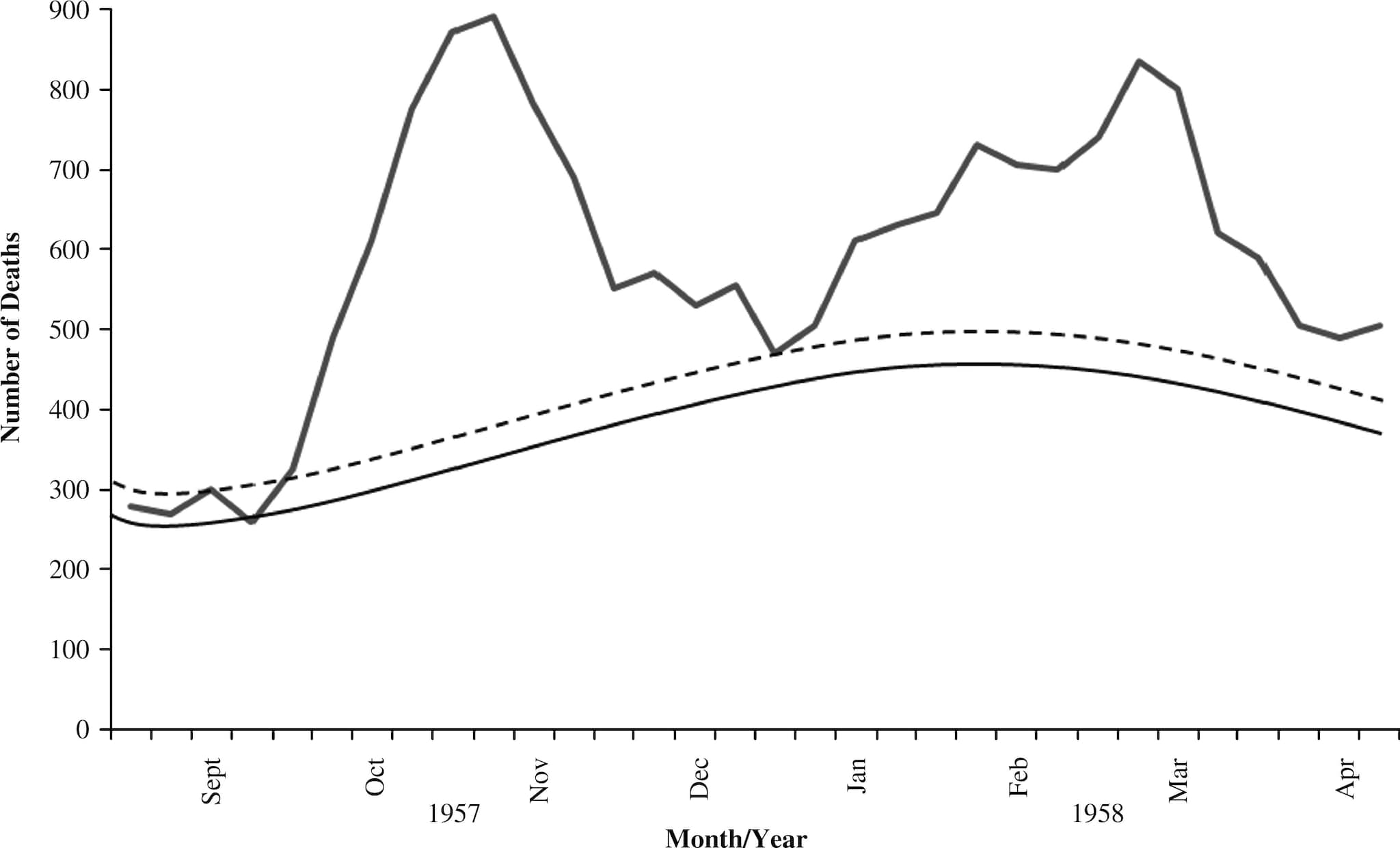
At the Centers for Disease Control and Prevention (CDC) press briefing yesterday on pandemic H1N1 influenza, spokesperson Dr. Anne Schuchat noted that while H1N1 activity was down, the virus was still more prevalent than what is normally seen for influenza. Warning that people should still get immunized against it, she also noted, “We also saw an uptick in pneumonia or influenza deaths in this past week.  And that isn’t something that we necessarily see around the Christmas holiday.”

The CDC is worrying about a growing complacency among the public. To illustrate the need for continued vigilance and immunizations, she showed this graph (also reproduced below) mapping the deaths from the 1957 influenza activity. You’ll note there was an initial wave in fall 1957, followed by a lull in which deaths decreased, and then a resurgence in which the number of deaths peaked in March 1958, close to the level in the first wave.

Hit it while it’s down. According to Schuchat, the lull (where we currently are) “essentially gave the all-clear whistle in that [1957] December/January time period.” “They had vaccine,” she noted, “but they didn’t encourage its use.” For now, she said, the message is this: “The illness is down.  There’s plenty of vaccine.  It’s a key window of opportunity. We don’t want to repeat the story from 1957.”

Nuff said.

Some Observations In Response to the NY Times Article on Palliative Sedation

By Judy Schwarz, PhD, RN*  


The NY Times article of 12/26/09 that described use of palliative sedation in hospice institutional settings provided helpful and clinically accurate informative—for the most part. These few notes are meant to address those issues raised by the article that may unduly alarm dying patients, their families, and their clinical caregivers.


1) 
There is a consensus among palliative care clinicians that “palliative sedation to unconsciousness” (a descriptive term that eliminates some of the visceral reaction elicited by use of the term “terminal sedation”) is an intervention used only when other therapies that do not compromise patient consciousness have failed and the patient continues to experience intolerable and intractable suffering that cannot otherwise be relieved.

2) Use of palliative sedation to unconsciousness has NOT been shown to cause a hastened death. Research showing that patients at the very end of life who receive palliative sedation do not die more quickly than patients who are not sedated has been published in such peer-reviewed journals as Annals of Oncology, Journal of Palliative Medicine, Journal of Pain and Symptom Management, Archives of Internal Medicine, and Palliative Medicine. (In response to the Times article, the National Hospice and Palliative Care Organization has made available a bibliography of these articles.)

This intervention is generally only provided when patients are “imminently” dying (a condition the recognition of which requires experience and clinical judgment) and is distinct from “respite sedation,” which is used when clinicians plan to awaken a patient from the unconscious state to […]

Go to Top