Top 15 American Journal of Nursing Blog Posts in 2013
Blogging – What Jolly Fun/Mike Licht, NotionsCapital.com, via Flickr Creative Commons
In keeping with journalistic custom, here’s an end-of-year list of the most popular 15 blog posts on Off the Charts in 2013. Some were new posts this year. Some were from previous years but are still as relevant as ever. We’d like to think not everything that appears on this blog is ephemeral. Thank you to all our excellent writers and thoughtful readers. Cheers!—Jacob Molyneux, senior editor/blog editor
1. “The Heart of a Nurse”
“As nurses, we are drawn to the field for many different reasons. What is exciting and fulfilling to some is stressful and boring to others. Our ability to show compassion is perhaps our best nursing skill, better than our proficiency with machines, computers, and even procedures. It may not be what we do so much as how we do it.”
2. “A Report from the ANA Safe Staffing Conference”
“Nurses continue to beg to be taken out of the ‘room and board’ costs and to be seen as an asset. But instead, they are often seen as a major expense that can be reduced for the […]
The Nursing Report That Didn’t Just ‘Sit on a Shelf’
Joyce Pulcini is director of the master’s programs and of community and global initiatives at the George Washington University School of Nursing in Washington, DC. She also is the contributing editor for AJN’s Policy and Politics column.
From otisarchives4, via Flickr
IOM speakers and panel focus on a major report’s increasingly visible real world effects—while emphasizing diversity and the roles of every type of nurse at every level.
On December 11, I attended the Institute of Medicine (IOM) event celebrating the three-year anniversary of the The Future of Nursing: Leading Change, Advancing Health report, released in 2010. The event at the National Academy of Sciences in Washington, DC, highlighted the impact of the report so far and discussed the continued work of the Future of Nursing: Campaign for Action in terms of priorities for the nursing profession.
Some highlights:
- Harvey V. Fineberg, president of the IOM and panel moderator, started with the fact that the The Future of Nursing: Leading Change, Advancing Health report had generated more than 1.3 million hits since it was first launched in 2010 and that this was one of the most successful of all of the IOM reports. The goal was that this report not sit on the shelf like many past reports but that […]
Predicting Who’ll Show Up: Research on Nurses’ Intentions to Work during a Public Health Crisis
By Sylvia Foley, AJN senior editor
Figure 1. Percentage of respondents indicating willingness to work during a flu pandemic according to self-reported perception of flu threat
During disasters and emergency situations, the public expects health care workers to show up and do their jobs. But this isn’t a given—there are always some who are either unable or unwilling to do so. So far, most of the research in this area has used convenience samples, hypothetical situations, or untested survey instruments, and very little has focused solely on nurses.
To learn more, Sharon Dezzani Martin and colleagues decided to explore further. This month’s original research CE, “Predictors of Nurses’ Intentions to Work During the 2009 Influenza A (H1N1) Pandemic,” reports on their findings. Here’s the abstract, which offers a brief overview.
Objective: This study examined potential predictors of nurses’ intentions to work during the 2009 influenza A (H1N1) pandemic.
Methods: A questionnaire was mailed to a random sample of 1,200 nurses chosen from all RNs and LPNs registered with the Maine State Board of Nursing during the second wave of the flu pandemic.
Results: Of the 735 respondents, […]
The ‘Dialectic at the Heart of Healing’

By Jacob Molyneux, senior editor
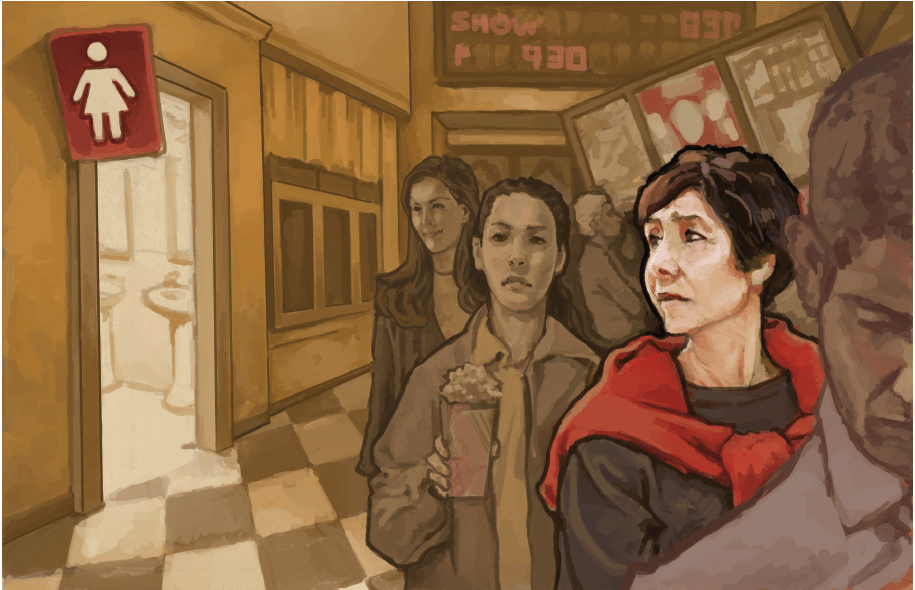
Here are the opening paragraphs of the short intro I wrote for our special December edition of the Reflections column. Since the illustrations are an important part of this column’s presentation, I’d suggest clicking through to the PDF versions of the articles linked to below:
“There is a dialectic at the heart of healing that brings the care giver into the uncertain, fearful world of pain and disability and that reciprocally introduces patient and family into the equally uncertain world of therapeutic actions.” —Arthur Kleinman, The Illness Narratives: Suffering, Healing, and the Human Condition
In recent years, the role of narrative in medicine and nursing has gained (or perhaps regained?) a certain amount of respect.
Some advocates value the stories of patients and practitioners because they bring us in from the cold, reminding us of the human side of an increasingly technology-driven field. Others argue for narrative as a crucial source of knowledge about disease processes and best practices, yet another form of evidence in the constant quest to improve outcomes. Others focus on the therapeutic aspect of such writing, our deep need to make sense of encounters shaped by loss, pain, and suffering, whether witnessed or experienced.
The Reflections column has been appearing monthly, with rare gaps, since 1983, when AJN debuted this and other new columns (as well as its editorial board). Reflections […]