As the VA Regroups and Recruits, The Words of Nurses Who Served

By Amanda Anderson, a critical care nurse and graduate student in New York City who is currently doing a graduate placement at AJN two days a week. The AJN articles linked to in this post will be free until the end of December.

Vietnam Women's Memorial, courtesy of Kay Schwebke Vietnam Women’s Memorial, courtesy of Kay Schwebke

A scandal earlier this year about suppressed data related to long wait times for appointments tainted the credibility of the Department of Veterans Affairs. On this Veterans Day week, the new secretary of Veterans Affairs has been using incentives and promises of culture change to promote new hiring initiatives for physicians and nurses. The focus as always should be on the removal of the barriers many veterans face in obtaining timely, high quality care. Naturally, a number of these veterans are nurses themselves.

To commemorate those who have bravely cared for our country, and who deserve the best of care in return, we’ve compiled a few quotations from nurse veterans who’ve written for or been quoted in AJN about their experiences in successive conflicts through the decades. Thank you for all your service, and for what you carry daily—as nurses, veterans, and patients.

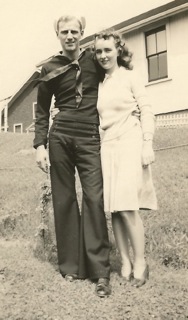
World War II
“I remember walking through cities leveled by bombs, looking at the hollow eyes and haunted faces of a devastated […]

A Nurse’s Legal Duty to Discern Potential Harm and Protect Patients

Illustration by Janet Hamlin for AJN. Illustration by Janet Hamlin for AJN.

By Jacob Molyneux, AJN senior editor

The November installment of AJN’s Legal Clinic column by nurse and attorney Edie Brous, “Lessons Learned from Litigation: The Nurse’s Duty to Protect,” describes a case in which nurses were held responsible for not adequately protecting a sedated patient from a sexually predatory physician. The case description begins this way:

NX was a young woman who underwent a laser ablation of genital warts at Cabrini Medical Center in New York City. While still under the effects of general anesthesia, she was transferred to a small, four-bed section of the recovery room. Shortly after her admission to the recovery room, the nurses admitted another patient to a bed two feet away from NX. The curtains were not drawn and there were no patients in the other two beds.

A male surgical resident, Andrea Favara, entered the recovery room wearing Cabrini scrubs and Cabrini identification. Residents were not directly assigned to the recovery room and were seldom called there. The nurses knew all of NX’s physicians but did not know Favara; he wasn’t one of NX’s physicians . . .

The details that follow are disturbing. After describing the case and the failure of nurses to confront this unknown physician or actively monitor his […]

AJN in November: Palliative Care, Mild TBI, the Ethics of Force-Feeding Prisoners, More

AJN1114.Cover.OnlineAJN’s November issue is now available on our Web site. Here’s a selection of what not to miss.

Palliative care versus hospice. For many seriously ill, hospitalized older adults, early implementation of palliative care is critical. These patients often require medically and ethically complex treatment decisions. This month’s original research article, “Staff Nurses’ Perceptions Regarding Palliative Care for Hospitalized Older Adults,” found that staff nurses often confuse palliative and hospice care, a fact that suggests a need for increased understanding and knowledge in this area. This CE feature offers 2.5 CE credits to those who take the test that follows the article.

Mild traumatic brain injury (TBI) can have profoundly negative effects on quality of life and can negatively affect relationships with family and caretakers. This issue’s other CE feature, “Mild Traumatic Brain Injury,” reviews the most commonly reported signs and symp­toms of mild TBI, explores the condition’s effects on both patient and family, and provides direction for devel­oping nursing interventions that promote patient and family adjustment. Earn 2 CE credits by taking the test that follows the article. To further explore the topic, listen to a podcast interview with the author (this and other podcasts are accessible via the Behind the Article page on our Web site or, in our iPad app, by tapping the icon on the first page […]

Ebola: A Role for Nurses in Sharing the Facts

By Shawn Kennedy, AJN editor-in-chief

Screen Shot 2014-10-29 at 12.27.27 PMThe current Ebola crisis has everyone concerned over transmission, and rightly so. The public has been in a quandary as to who and what to believe. I can’t say I blame them. We should have been better prepared and anticipated that, given the situation in West Africa, we would eventually see a patient with Ebola present to a U.S. hospital ED (or clinic or urgent care center). What’s surprising is that it didn’t happen sooner.

I’d thought fears about widespread transmission of Ebola had abated after no more new cases arose from that of Thomas Eric Duncan in Dallas: his family, who were in the apartment with him during the time he was sick, did not contract Ebola and have since been released from quarantine; the two nurses who became ill treating Duncan have now been declared Ebola free and none of their contacts have become ill; no other nurses who provided care for him have fallen ill.

But with the onset of confirmed Ebola in a New York physician who had recently returned from caring for Ebola victims in West Africa, fears of widespread contagion resurfaced. Craig Spencer had been self-monitoring his symptoms while he went about his life; when he began to feel ill and developed a low-grade fever, he initiated a controlled transport in isolation […]

10 Good Things About Being an Older Nurse

Alice Facente, MSN, RN, is a community health education nurse in Connecticut. Her Reflections essays, “At Her Mercy” and “The Dirtiest House in Town,” were published, respectively, in the August 2009 and January 2010 issues of AJN.

Puddle Reflection/by joiseyshowaa, via Flickr Puddle Reflection/by joiseyshowaa, via Flickr

I recently passed a professional career milestone: 40 years since I’d graduated from nursing school. When I began my career, nurses still wore white starched caps and white uniforms. I don’t know how we accomplished everything we did with those impractical caps perched on our heads. The shocking realization that four decades had so quickly passed forced me to think about all of the benefits of being a mature, experienced nurse. Right off the top of my head, I thought of 10 things (and yes, these are generalizations and exceptions exist).

1. Older nurses are often more empathetic. Chances are that in the last several decades every older nurse has been a patient, undergone surgery, become a parent and possibly a grandparent, encountered personal financial challenges, experienced the death of a close friend or family member, and much more.
2. Death is not so frightening. Nurses have cared for people at all stages of the life cycle and know that, with planning and preparation, […]

Go to Top