The Slow Old Days

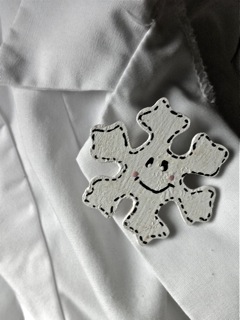
Christmas cards with angels, scandinavian “nis...

By Maureen “Shawn” Kennedy, interim editor-in-chief

On this past Monday at Slate, writer Kate Julian, lamenting that her mailbox was devoid of cards this season, asked, “Did Facebook Kill the Christmas Card?” She went on to detail all the ways people can connect online nowadays, making a case that the traditional “here’s what I’ve been doing all year” card is going the way of the little black address book and pocket calendar.

I’m not so sure we can put all the blame on Facebook. In my own case, I was (and still am) unprepared. I just know Christmas came earlier this year—I don’t know how they did it, but somehow the calendar seemed to do one of those Star Wars hyperspeed jump things, where lights whiz by and you’ve jumped light years ahead. I remember Halloween, and then there was Thanksgiving . . . but wasn’t that just last week?

Or maybe it only seems that way because with technology we can now work more efficiently and be more productive in less time. But where IS all this time I’m saving with technology?

This time of year makes me think of childhood Christmases, but not so much my own. My mother grew up in a small New England town during the 1930s; it was always cold and snowy. It was a mill town and no one had money […]

2016-11-21T13:14:34-05:00December 22nd, 2010|Nursing|2 Comments

‘The Birthplace’: Showcasing a Collaborative Practice Model

By Sylvia Foley, AJN senior editor

Photojournalist Alice E. Proujansky reports in AJN this month on The Birthplace, a collaborative care practice model at Baystate Franklin Medical Center in Greenfield, Massachusetts, where a team of five nurse midwives, three obstetricians, and 35 nurses attend some 400 to 500 births annually. Except for preterm and other higher-risk deliveries, the nurse midwives manage all deliveries and monitor fetal and maternal health. Patients complete detailed birth plans that afford them various care options. Physicians are called in only when necessary; as one nurse midwife told the author, “There’s an awful lot that we can do on our own.”

How well does the model work? The Birthplace has lower-than-usual rates of medical interventions such as episiotomy, epidoral anesthesia, and cesarean section. The patients have greater autonomy and decision-making capabilities. And the practitioners “relish the collaborative approach,” says Proujansky, who interviewed several clinicians and patients for the article; her photographs appear alongside the text and on the December cover. Proujansky’s last piece for AJN, a photo essay on a Dominican maternity ward, appeared in our December 2008 issue; read it here.


Bookmark and Share

2016-11-21T13:14:38-05:00December 21st, 2010|Nursing, patient engagement|0 Comments

‘At the Night Camp’: How Assumptions About Patients Can Blind Us

The entire time he was with us he kept looking around, eyes darting back and forth and toward the truck he’d driven, which he told me wasn’t his own. He shifted uneasily in his chair, and I felt the impulse to try to comfort him and tell him we could help.

That’s an excerpt from “At the Night Camp,” the December Reflections essay in AJN. The essay, by Meg Sniderman, a student in the MSN program at Emory University School of Nursing in Atlanta, takes a wry, honest look at the ways we can imagine whole lives for those around us based on their cultural identifiers, yet often miss the most obvious things about these patients . . . the things that make them just like us, despite apparently vast cultural differences.—JM, senior editor/blog editor

Bookmark and Share

Amazing and Disheartening: How We Continue to Fail Family Caregivers

By Shawn Kennedy, AJN interim editor-in-chief

Recently, as part of an ongoing collaborative initiative on supporting family caregivers with AARP (see the comprehensive, and free, AJN supplement called State of the Science: Professional Partners Supporting Family Caregivers), I listened to a group of family caregivers talk about what it’s like to care for sick parents and relatives at home. 

Most of the caregivers were in their 60s and retired, and now found themselves doing the back-breaking work of being on call 24/7, attending to everything from bathing and feeding to chauffeuring to health care appointments, paying the bills, and running the household—sometimes two households, if they lived apart from the person for whom they provided care.

It was amazing and disheartening to listen to them—amazing in terms of the lengths they went to make sure they were doing the right things, and disheartening because they were mostly on their own, with little support from the health care system. And this was right from the start; all said that information to prepare for the transition from hospital to home had been lacking. For the most part, families looked to the family physician to answer questions about what they would need to do at home—nurses were hardly mentioned.

What They Said

When They Can’t Tell You About the Hurt: Assessing Pain in People with Intellectual or Developmental Disabilities

By Sylvia Foley, AJN senior editor

When S.M., a 47-year-old resident at a facility for people with intellectual or developmental disabilities, started hitting himself in the left eye, his caregivers weren’t sure why. S.M., whose developmental quotient is equivalent to that of a two- or three-year-old, couldn’t tell them. Some thought he was frustrated at not being allowed to drink as much coffee as he wanted; others thought a recent decrease in his medication—quetiapine (Seroquel)—might be a factor. But a chart review revealed that both his father and brother had a history of cluster headaches. Was S.M.’s behavior an indicator of headache pain? How could clinicians best assess him?

In this month’s CE feature, authors Kathy Baldridge and Frank Andrasik provide an overview of pain assessment in people with intellectual or developmental disabilities, summarize the relevant research, and discuss the applicability of the American Society for Pain Management Nursing practice guidelines for assessing pain in nonverbal patients. The guidelines describe various behavioral pain assessment tools, some of which might be useful with S.M. and others like him. Other assessment methods include

a search for pathologic conditions or other problems or procedures known to cause pain; the observation of behaviors that might indicate pain; and the use of proxy reports (also called surrogate reports) by people who know the person best, whether family caregivers or professionals.

S.M. was encouraged to draw himself and what the “hurt” felt like; two […]

2016-11-21T13:14:41-05:00December 14th, 2010|Ethics, nursing perspective, pain management|3 Comments
Go to Top