AJN in November: Palliative Care, Mild TBI, the Ethics of Force-Feeding Prisoners, More

AJN1114.Cover.OnlineAJN’s November issue is now available on our Web site. Here’s a selection of what not to miss.

Palliative care versus hospice. For many seriously ill, hospitalized older adults, early implementation of palliative care is critical. These patients often require medically and ethically complex treatment decisions. This month’s original research article, “Staff Nurses’ Perceptions Regarding Palliative Care for Hospitalized Older Adults,” found that staff nurses often confuse palliative and hospice care, a fact that suggests a need for increased understanding and knowledge in this area. This CE feature offers 2.5 CE credits to those who take the test that follows the article.

Mild traumatic brain injury (TBI) can have profoundly negative effects on quality of life and can negatively affect relationships with family and caretakers. This issue’s other CE feature, “Mild Traumatic Brain Injury,” reviews the most commonly reported signs and symp­toms of mild TBI, explores the condition’s effects on both patient and family, and provides direction for devel­oping nursing interventions that promote patient and family adjustment. Earn 2 CE credits by taking the test that follows the article. To further explore the topic, listen to a podcast interview with the author (this and other podcasts are accessible via the Behind the Article page on our Web site or, in our iPad app, by tapping the icon on the first […]

Ebola: A Role for Nurses in Sharing the Facts

By Shawn Kennedy, AJN editor-in-chief

Screen Shot 2014-10-29 at 12.27.27 PMThe current Ebola crisis has everyone concerned over transmission, and rightly so. The public has been in a quandary as to who and what to believe. I can’t say I blame them. We should have been better prepared and anticipated that, given the situation in West Africa, we would eventually see a patient with Ebola present to a U.S. hospital ED (or clinic or urgent care center). What’s surprising is that it didn’t happen sooner.

I’d thought fears about widespread transmission of Ebola had abated after no more new cases arose from that of Thomas Eric Duncan in Dallas: his family, who were in the apartment with him during the time he was sick, did not contract Ebola and have since been released from quarantine; the two nurses who became ill treating Duncan have now been declared Ebola free and none of their contacts have become ill; no other nurses who provided care for him have fallen ill.

But with the onset of confirmed Ebola in a New York physician who had recently returned from caring for Ebola victims in West Africa, fears of widespread contagion resurfaced. Craig Spencer had been self-monitoring his symptoms while he went about his life; when he began to feel ill and developed a low-grade fever, he initiated a controlled transport in isolation […]

Fear of Infection, Getting Job Done: Not New to Nurses

Quarantine, isolation: medical terms heavy with accreted meanings (psychological, metaphorical). Terms we’ve been hearing a lot lately, as in the case of nurse Kaci Hickox, quarantined in a tent in New Jersey after her return from treating Ebola patients in Sierra Leone, released today after days of public controversy.

These words have vivid histories. Epidemics of polio, influenza, and other illnesses took many lives in the U.S. during the 20th century. And nurses were always there, taking risks, applying the latest knowledge to control or cure. In the April 1940 edition of the American Journal of Nursing, a nurse wrote a short but evocative essay about her own fears of entering an isolation room to treat a child with an unnamed condition, perhaps measles or scarlet fever. Here’s a snippet.

Germs

(One wonders if she had been given the recommended personal protective equipment of the time for such infections . . .)

To read the article, free until December 1, click this link and then click through to the PDF version in the upper-right corner of the landing page.—Jacob Molyneux, senior editor

Bookmark and Share

2016-11-21T13:03:38-05:00October 27th, 2014|Nursing|3 Comments

Choosing Wisely: American Academy of Nursing Highlights Unnecessary Nursing Practices

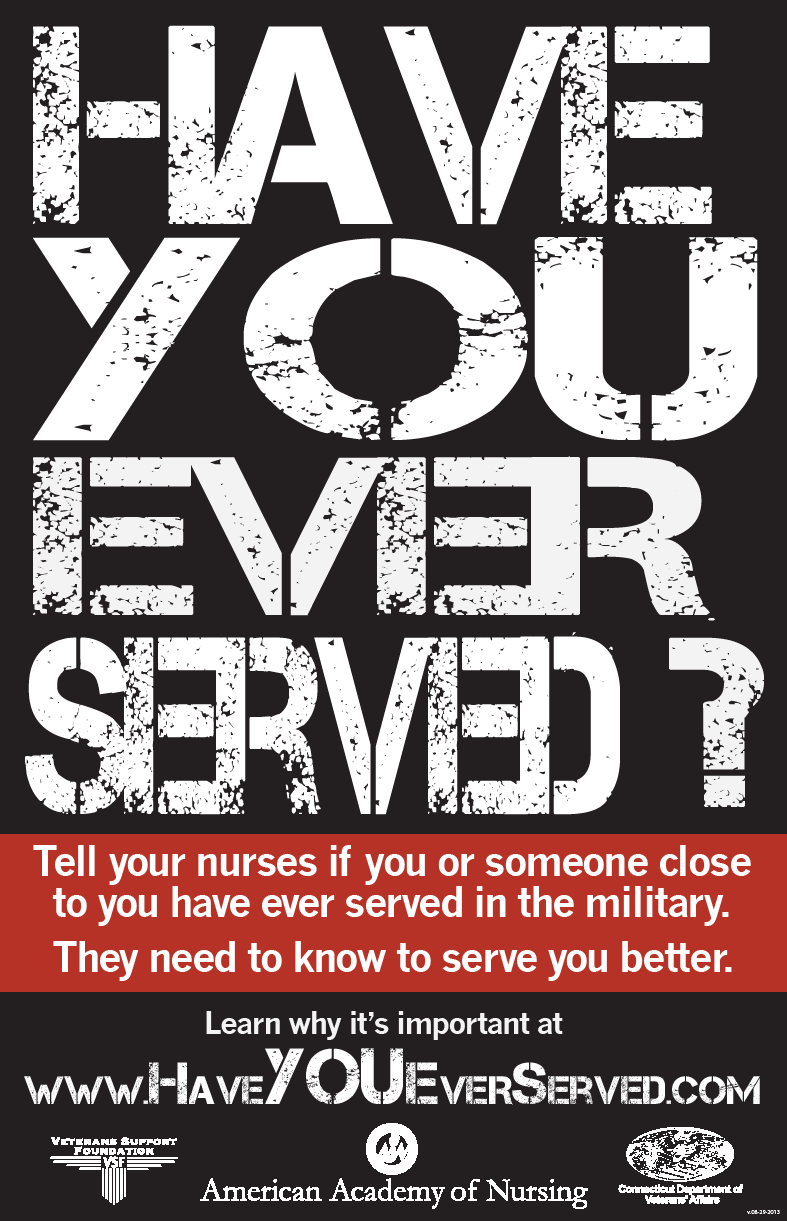
The American Academy of Nursing (AAN) recently announced that it has joined the ABIM Choosing Wisely campaign with a list that focuses specifically on nursing interventions or practices that are not supported by evidence. The list is called Five Things Nurses and Patients Should Question. Here it is in short form—full explanations of the rationale for each item are available at the above link.

  1. Don’t automatically initiate continuous electronic fetal heart rate Screen Shot 2014-10-24 at 11.10.10 AMmonitoring during labor for women without risk factors; consider intermittent auscultation first.
  2. Don’t let older adults lay in bed or only get up to a chair during their hospital stay.
  3. Don’t use physical restraints with an older hospitalized patient.
  4. Don’t wake the patient for routine care unless the patient’s condition or care specifically requires it.
  5. Don’t place or maintain a urinary catheter in a patient unless there is a specific indication to do so.

The Choosing Wisely initiative encourages health care provider organizations to create their own lists of tests and procedures that may be overused, unsafe, or duplicated elsewhere. Using these lists, providers can initiate conversation with their patients to help them choose the most necessary and evidence-based care for their individual situations. The lists are not meant to be proscriptive, and also address situations where the procedures may be appropriate. […]

At the Intersection of Hospice and Obstetrics, a True Test of Patient-Centered Care

By Jacob Molyneux, senior editor

Renee Noble with her newborn daughter, Violet. Photo by Heidi Ricks. Renee Noble with her newborn daughter, Violet. Photo by Heidi Ricks.

We’d like to draw attention to a particularly frank and thought-provoking article in the October issue of AJN. “A Transformational Journey Through Life and Death,” written by a perinatal nurse specialist who is also a bioethicist, describes a hospital’s experience in meeting the needs of a patient with two very different, potentially conflicting, medical conditions.

It was a sunny afternoon in mid-October when I first met Renee Noble. I had already heard about her from staff who had given Renee and Heidi Ricks, her friend and doula, a tour of the neonatal ICU and were taken aback when they asked to see the Hospice Inn as well. The nurses knew that Renee had been diagnosed with ovarian cancer, but no one had said anything about it being terminal. Heidi had insisted that after Renee delivered she would need hospice inpatient care. Alarmed, the staff had called me, the perinatal clinical nurse specialist, after Renee and Heidi left.

In addition, this is a patient with strong preferences about her own care, preferences that may be at odds with the more conventional approaches to treatment held by many […]

Go to Top