Nurses spend more time with patients than most other types of providers and have unique insight into patient care and the the healthcare system.

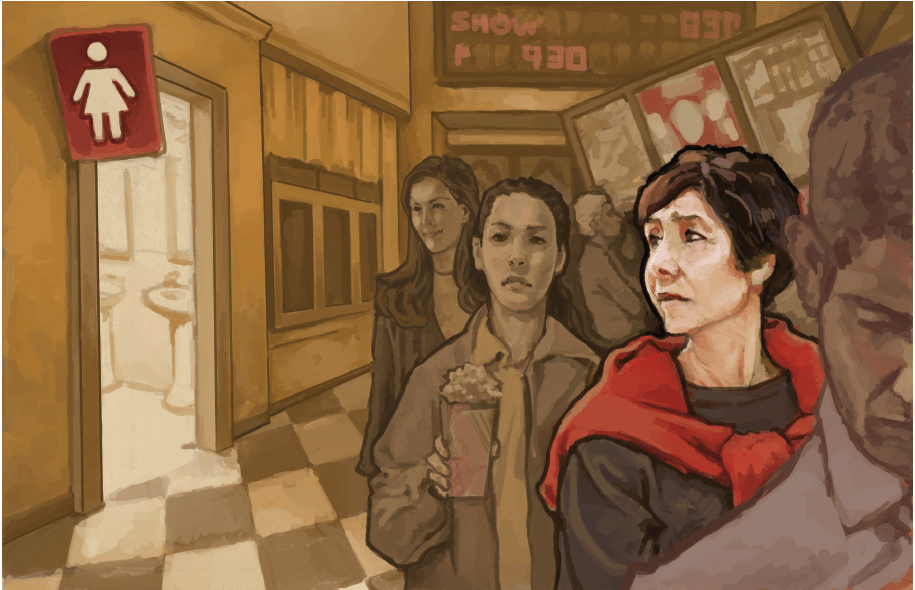
Chronic, Common, Hidden: Helping Patients With Urinary or Fecal Incontinence

Article illustration by Gingermoth. All rights reserved. Article illustration by Gingermoth. All rights reserved.

By Maureen Shawn Kennedy, MA, RN, AJN editor-in-chief

Urinary and fecal incontinence are not the kinds of health topics widely discussed—people may compare notes about knee or hip replacements or their cholesterol levels, but you’ll find few people talking about leaking urine or feces. Even at medical and nursing conferences—unless one happens to be at a conference specifically dealing with those issues—you might be hard-pressed to find the topic on a program agenda.

But these are common problems—a 1995 report in the CDC’s MMWR estimated that 15%–30% of adults over age 60 suffer from urinary incontinence. (And that was 10 years ago. No doubt that number is higher by now, given the higher numbers of people who are over 60.) Fecal incontinence occurs in about one in 12 adults—in a 2009 report, that was 18 million people.

It’s the kind of problem that can drastically change the quality of life for those who have it, due to their fear of having an “accident” in public. Think about it: no extended excursions unless there are facilities all along the way (this can rule out many outdoor activities like golf, trips to the beach, or hiking); timed meals and beverages to reduce the chance of […]

What Ever Happened to a Good History?

ky olsen/via Flickr ky olsen/via Flickr

By Karen Roush, MS, RN, FNP, clinical managing editor

What ever happened to a good history? We were taught as NP students that the history portion of the exam was as important as the physical. In fact, in most cases it’s what you learn in the history—from asking the right questions and really listening to the patient’s answers—that gives you the information you need to figure out what is going on. The physical findings either support what you’re thinking or lead you to ask more specific questions.

A good history isn’t just listening to the patient’s answers to your questions; it’s listening to all the information they offer. Take for example, the middle-aged construction worker who takes his lunch hour to come in to the clinic complaining of a cold. He lists the usual symptoms, cough, fatigue, a little shortness of breath, and then as you’re starting the exam he casually mentions that he hasn’t been to a doctor in 15 years.

Someone who’s managed to stay out of a doctor’s office for 15 years and now shows up, on his lunch hour, because of a simple cold? So, you ask some more questions and learn about some chest pressure he attributes to the coughing he’s been doing and about his […]

2016-11-21T13:05:39-05:00January 10th, 2014|nursing perspective, Patients|4 Comments

AJN 2013 Book of the Year Awards: Winners in 19 Categories

AJN 2013 Book of the Year Awards 

BOTYSince 1969, AJN has been announcing its annual list of the best in nursing publishing. The most valuable texts of each year are chosen by AJN’s panel of judges. Only books published between August of the prior year and August of the award year are eligible. To quote AJN‘s editor-in-chief Shawn Kennedy, our Book of the Year awards, announced each year in our January issue, “are sought after by authors and publishers . . . the awards give us the opportunity to acknowledge high-quality publications.”

Below you can find the 2013 first-place winner for each of the 19 categories. To see a listing of all winners (there are 2nd and 3rd place winners for each category as well), please click this link. […]

Bed Bath: The First Day of the Rest of Her Life

BedBathIllustration“Bed Bath,” the January Reflections column by pediatric nurse practitioner Kathleen Hughes, is a description of giving a first bed bath as a nurse after many years working in other professions. It’s not the first essay we’ve ever published about giving a bed bath, but it’s wise and meditative and well worth a read. Here’s a small section of this short essay, but please read the whole thing.—Jacob Molyneux, senior editor

An Ivy League degree and 15 years of teaching and writing did not prepare me any better than my mostly 20-something counterparts in the ways of giving a bed bath to a 72-year-old man I’d never met. What might be different for me is that I have known many kinds of professional challenges. What might also be different is that I have lived enough longer to have attended my father’s hospital-bound illness and death, and to have given birth to and cared for two young children. And so when I washed this man, I was washing my father, I was washing my children; I became one of those people who cared for us. Though giving a bed bath is not anything like lecturing to AP students on Faulkner, or writing a newspaper article on gun control or university library funding or modern exorcisms, I am not sure that either of those tasks made me hunker in a corner for five minutes, gathering myself before striding into the room. I’ve […]

The Not Good Nurse – Some Dark Holiday Reading

By Shawn Kennedy, AJN editor-in-chief

GoodNurseHaving some down time over the holidays can be a good chance to catch up on some reading. Because so much of my work entails reading manuscripts submitted to AJN about nursing practice and research, I look for my leisure reading to be something not connected to nursing.

Well, the book I recently read—a quick, engaging read—was about nursing, sort of. The book was Charles Graeber’s The Good Nurse: A True Story of Medicine, Madness and Murder, the story of nurse-turned-serial-killer Charles Cullen. While I find the title to be a bit sensationalist, the book is not. There’s no real answer as to why Cullen did what he did—Cullen apparently had a miserable childhood, was often a target of bullies, had failed marriages and made many suicide attempts to gain sympathy or attention. Graeber doesn’t really seek to answer the why of what Cullen did but instead focuses on his behavior and relationships.

The chilling aspect of the story is how easy it was for Cullen to get away with his killing through the use of essential technology relied on by nurses for the care of hospital patients. The medication and computer systems that he manipulated to cover his tracks also eventually allowed an intrepid nurse colleague to help police prove their case—only a nurse knowledgeable about the day-to-day use of the systems could uncover the […]

Go to Top