Nurses spend more time with patients than most other types of providers and have unique insight into patient care and the the healthcare system.

Placenta Facebook Photos: Nurse and Mommy Tribes See Student Expulsion Differently

Will patients trust that when they are anesthetized they will be treated respectfully? Will hospitals and other clinical agencies be less inclined to host students for fear of litigation over privacy? I imagine at the very least, all nursing schools are now quickly developing social media policies. The American Medical Association has one and the American Nurses Association is, I’m told, developing one.

Choosing AJN’s Med-Surg Nursing Books of the Year


By Julie Zerwic, PhD, RN, interim executive associate dean, College of Nursing, University of Illinois at Chicago

The faculty in the department of biobehavioral health science at the University of Illinois College of Nursing looked forward with enthusiasm this fall to our opportunity to pick the AJN medical—surgical book of the year. The range of books that are submitted is outstanding and it was a challenge to find the book that we felt was deserving of the title. In fact, we selected two books. Both selections fill a need, covering material neglected in other works. 

How to Manage Pain in the Elderly, by Yvonne D’Arcy, will be useful for any nurse working with older adults in pain. The book begins by dispelling myths about the experience and treatment of pain in the elderly. The material in each chapter is brought together by text boxes, figures, and rich case studies. The book includes material on the physiology of pain in the elderly, pharmacologic and nonpharmacologic approaches to pain management, issues of multidrug therapy, and palliative care.

I recently watched as my 75-year-old mother experienced a long episode of pain after knee replacement surgery. An infection and then problems with a degenerative spine left her searching for some type of therapy that would relieve the debilitating pain. Many of the concepts that D’Arcy covers in her book were relevent to the situation my mother found herself in. This book will provide a resource as health care providers […]

2016-11-21T13:14:25-05:00January 6th, 2011|nursing perspective|0 Comments

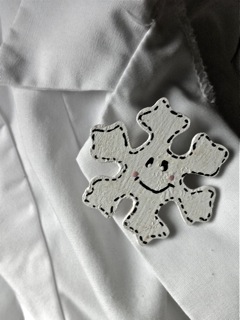
The Puzzle of Snowflakes: Treatments May Be Uniform, But Patients Are Not

Julianna Paradisi blogs at JParadisi RN; her artwork appeared on the cover of the October 2009 issue of AJN, and her essay, “The Wisdom of Nursery Rhymes,” is upcoming in the February issue.

My patient sits in a chair, watching a DVD presentation about caring for his new, surgically inserted, tunneled catheter. In a few weeks, this catheter will be used for his stem cell transplant. I am teaching him how to flush it and change the dressing. He’s from out in the sticks, too far away from the clinic for our nursing staff to provide the care for him. He doesn’t have family or friends for support. After the DVD, I bring out a chest manikin and dressing kit to demonstrate the sterile dressing change. As I explain the technique of donning sterile gloves, he stops me with a challenging glare.

“I can’t do sterile.”

I stop what I’m doing to explain the dangers of infection if the dressing isn’t sterile. Like a car stuck in a snowdrift, he remains unbudged. “I can’t do sterile,” he insists. I puzzle over what to say next. My coworkers flurry by in their white lab coats. I’m wearing a white lab coat, too. My patient is lost in a health care blizzard. He doesn’t see snowflakes. He only sees snow.

Career Change in 2011? Ask the God of Gates, Doors, and Beginnings

Bust of the god Janus, Vatican museum, Rome

By Peggy McDaniel, BSN, RN, infusion practice manager

I’ve never been much for New Year’s resolutions. I guess it’s because I know I won’t keep them—or at least recognize that my track record has been less than stellar. I’ve made the usual promises to myself: eat less, exercise more, learn a new craft, spend more time reading and less time on the Internet . . . and so on.

It seems as if such promises are made with tongue in cheek—even, possibly, made to be broken. So many resolutions are about self-improvement; I suppose that’s a good thing, except we don’t tend to follow through. The yoga classes I attend are always packed from January 2 through approximately March 15, then attendance slowly tapers back to the usual attendees. Do we feel we’ve been successful if we hang in there for a month, two or three months?

I’m not sure I’ve ever made a New Year’s resolution I really planned on keeping.

According to Wikipedia, the Roman ruler Julius Caesar changed the celebration for New Year’s from March to January 1 in 46 B.C. The day was “dedicated to Janus, the god of gates, doors, and beginnings,” who happened to have a face on both sides of his head. This signified the ability to look back and forward at the same time.

That’s something worthwhile—looking back at what we can and should change while […]

2016-11-21T13:14:29-05:00December 30th, 2010|career, nursing perspective|5 Comments
Go to Top